The Complete Low-down on Taking an Education Loan — My Real Talk ✍️
Hey there! So you’re thinking of taking an education loan — maybe for that MBA, or an international study trip you’ve been dreaming of. Well, buckle up. Because I’m going to walk you through everything I wish I’d known when I first applied for my loan — the good, the bad, the “why didn’t somebody tell me that?”, all wrapped in a conversational, story-driven style. By the way — yes, I took an education loan myself, and yes, I made a few mistakes. But I learned. And now I want you to learn too.
Why? Because when you’re dealing with money, future, and the possibility of decades of repayment — you owe it to yourself to make smart choices. So let’s dive in.
What exactly is an Education Loan? And Why Should You Care?
When I was 17 and applying for college, the idea of “loan” felt like something far away — mortgages, car loans, stuff for adults. But fast-forward a few years: I was staring at an offer letter from a college abroad, my parents looking hopeful but nervous, and the tuition staring back at us like “Pay-Me”. That’s when I realized: an education loan is basically a bridge — a financial bridge between your dream and your bank account.
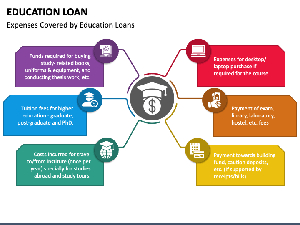
In simple terms: you borrow money (from a bank or NBFC), use it for your education (tuition fees, hostel, books, sometimes travel) and then pay it back (with interest) once you finish (and ideally, start earning). In India, these are usually called education loans (or student loans). According to experts, interest rates are from around ~8% to 16% per annum depending on the lender, amount, institution etc.
So yeah — it’s not something to take lightly. But also: it’s not a bogey-man loan. If you pick the right one, it can absolutely help you launch your future.
My Own Story — How I Ended Up With a Loan
Let me disclose my little anecdote. I got into a good college (in India) for a master’s programme. My parents saved some, but not enough. I didn’t want to sit back and delay my plans — so I decided to apply for a loan.
I went to the bank (yes, the old-school branch, not just an online click). Filled forms. Submitted marksheets. They asked for a guarantor. They asked for collateral (which my family didn’t really want to give). We finally got something workable: a loan with a moratorium (meaning I didn’t have to pay the principal while studying). It felt like a relief.
But later, when I started payment, I realized: “Oh wait — they still accumulated interest during the moratorium, and that adds up.” I also learned that I might have borrowed a bit too much, thinking “Hey, I’ll just EBAY my way out of it later” (not a great plan).
So: I share that story so you don’t make all my mistakes — maybe just some small ones .

Types of Education Loans in India — What Fits Your Journey?
Alright, let’s talk categories. Because loans aren’t “one size fits all”. According to ICICI Bank (and other major lenders) you’ll find:
-
Education Loan for Indian Colleges – for undergraduate, postgraduate, diploma courses within India. Covers tuition, hostel, lab fees etc.
-
Overseas Education Loan – if you’re planning to study abroad (USA, UK, Canada, Australia etc). These typically allow higher amounts, and sometimes include travel/accommodation costs too.
-
Career Development / Skill-Upgrade Loans – for working professionals who want to take a certificate, training, or executive course. Not always labelled as “education loan”, but same idea.
So before you apply — ask: “Which bucket am I in?” Because that shapes interest rate, collateral, co-applicant requirements.

Key Parameters You Must Check (Before Signing That Loan Document)
Here’s where things get real. I’m going to list what I looked at, what I should have looked at more carefully, and what you MUST check. Honestly, this list saved my sanity during repayment.
✅ Interest Rate
-
Very important: The % that you’re going to pay over and above what you borrow. In India education loans range from ~8 % to ~16 % p.a. depending on bank/NBFC, course, amount.
-
Even a 1% difference matters. A case: someone borrowed ₹30 lakh, rate 12% → EMI ~₹43,566 for X years. If rate 10% → EMI ~₹40,462. That’s a big difference.
-
Ask: Is it fixed or floating? What happens if rates rise?
✅ Moratorium / Repayment-Tenure
-
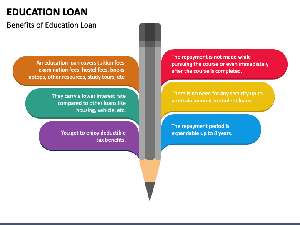
Moratorium means you don’t pay principal while studying (and sometimes 6–12 months after course). But interest might still accumulate.
-
Repayment tenure longer = smaller EMIs, but more interest overall. Short tenure = larger EMI, but less total interest.
-
Make sure the tenure aligns with your expected earnings. If you’ll take 3 years to land a job, choose accordingly.
✅ Collateral, Co-applicant / Guarantor
-
For large loans (especially abroad) banks often ask for collateral (property, fixed deposit) or a guarantor with good credit.
-
If you don’t have assets, find a trustworthy co-applicant (usually a parent/guardian) with income and credit.
✅ Just the Loan Amount You Need, Not What You Want
-
Borrowing more because you “might need it” can backfire. I did that a bit.
-
Estimate tuition + living + travel + contingency — but don’t load up on fluff. Because you’ll pay interest on the whole amount.
-
Use an EMI calculator. Ask: “If I graduate and get job in 6 months with X salary, can I pay this?”
✅ Processing Fees, Prepayment/Foreclosure Charges
-
Some banks charge 1-5% processing fee.
-
Prepayment: if you get job early and want to close loan, some banks charge 1-2% of outstanding. Ask about that.
-
Late payment penalties: missing an EMI could damage your credit score. Ouch.
✅ Tax Benefits
-
Good news: interest on education loan is typically deductible under Section 80E of Income Tax Act. This reduces your tax burden during repayment years.
✅ Accreditation & Course Value
-
If your institution or course isn’t recognized, banks might reject your application.
-
Also: ask yourself: after this course, will I likely earn enough to service the loan? A fancy certificate is nice, but if no job follows, you’re just signing up for paying years.
My Mistakes (So You Don’t Have to Make Them)
Let’s keep it real: I was slightly over-confident. Here’s what I wish I’d done better — feel free to learn from me.
-
I borrowed a little more than I strictly needed, thinking “Better safe than sorry.” But that extra ₹ didn’t help much — I still ended up spending on things I didn’t fully use.
-
I didn’t fully anticipate how much “interest during moratorium” would add up. It was like watching snowball roll downhill: small start, big finish.
-
I underestimated the time to find a decent job. I assumed I’d land one within 3 months. It took 7. Those extra months meant I started paying (or interest stacking) earlier.
-
I didn’t keep a very tight budget in the first year after graduation. If I had, I could have pre-paid some amount and saved interest.
So if I were to do it over: borrow just what you need, build a realistic job timeline, set aside a buffer (just like rainy days), and keep pre-payment as a goal.
Step-by-Step: How to Apply for an Education Loan
By the way, by doing this process you’ll feel less “lost in bank forms”. Here’s a rough roadmap:
-
Secure admission/offer – You need proof of being admitted to institute/course. Without that many banks won’t sanction.
-
Research lenders & compare – Interest rate, tenure, collateral, processing fee, moratorium.

-
Collect documents – ID proof, address, admission letter, course fee structure, past academic records, co-applicant’s income proof, property documents (if collateral).
-
Fill application & submit – Online or branch.
-
Sanction letter & disbursal – Bank issues sanction letter, verifies documents, disburses funds (often directly to institution for fees, or into student’s account).
-
Repayment begins – After moratorium (course + 6-12 months) you’ll start paying EMI.
-
Monitor & manage – Keep adjusting if possible, try pre-payment, avoid defaults.
Smart Tips to Use Your Education Loan Wisely (No Headaches Later)
Here are some nuggets I learned or picked up from experts:
-
Choose a bank with good customer support — if your branch is helpful, it reduces stress.
-
Start building career early — internships, part-time, side projects help. If you land a job early, you can pre-pay.
-
Keep track of interest accumulation — ask bank: “While I study, how much interest keeps stacking up?”
-
Budget your lifestyle post-graduation — when you get salary, don’t go wild. Because part of it has to pay off the loan.
-
If you get a windfall (bonus, gift, grant) — use it to reduce principal — small amounts early make a big difference in long term interest.
-
Stay aware of government schemes — For instance, the Central Sector Interest Subsidy Scheme (CSIS) in India gives interest subsidy during moratorium for students from weaker economic sections.
-
Read the fine print — don’t assume “free pre-payment” or “no collateral” unless it’s written.
-
Don’t neglect your credit score — repayment on time builds your credit. Miss one, and things go south faster than you think.
When an Education Loan Doesn’t Make Sense
Okay — this is the part I really want you to think about. Because sometimes the answer is: Maybe you shouldn’t take a loan. Let’s be honest.
-
If the course you’re planning has very low employability (in your region) — then borrowing huge amount is a gamble.
-
If you already have a lot of other debt (credit cards, personal loans) — piling more debt might stress you.
-
If you don’t have a realistic job plan post-course — you are taking a risk. I saw this when I read that some students abroad were struggling to find jobs and servicing loans.
-
If you can fund your course partially with savings/scholarships and borrow only minimal — it could be better to keep debt light.
So the key question: Will this loan ultimately help me increase my earning potential by more than I’ll pay in interest? If yes → go for it. If no → reconsider.

FAQ Section: Your Top Questions Answered
Q1: How much interest will I pay on an education loan?
A: Depends hugely on amount, tenure, interest rate. In India, typical rate ~8-16% p.a.
If you borrow ₹10 lakh at 10% for 10 years, total interest could easily exceed ₹5-6 lakh. Use calculator.
Q2: When do I start repaying the loan?
A: Usually after the moratorium period: that’s course period + 6-12 months (or when you land job) depending on lender.
Q3: Can I pre-pay the loan?
A: Usually yes, but some lenders charge a pre-payment fee (1-2%) for certain amounts. Always ask.
Q4: Is collateral always required?
A: Not always. For smaller amounts (say up to ₹7.5 lakh) many banks offer loans without collateral. But for bigger overseas loans, yes, often required.
Q5: Can I claim tax benefit?
A: Yes — the interest paid on education loans is eligible for deduction under Section 80E of the Income Tax Act (India).
Q6: What if I don’t get a job on time?
A: Good question. Then you might still start paying interest or EMI depending on lender. Make sure you plan for this scenario — buffer your finances or talk to bank about flexibility.
My Final Thoughts — Why It’s Worth It (With Caution)
Taking an education loan is like buying a ticket for a roller-coaster ride: thrilling, with ups and downs, and you better have your safety bar locked. If done right, it enables you to go from “I wonder if I can” to “I am doing”. It invests in your potential.
But the warning part: it’s an investment, not a free gift. It comes with commitments. And just like any good investment — you should have a strategy, you should understand the returns, you should know the downside.
From personal experience: I wouldn’t say I regretted taking the loan — because the lifestyle upgrade, the confidence boost, the network I built — made it worthwhile. But if I could talk to my younger self, I’d say: “Borrow wisely. Don’t be greedy. Be ready to hustle.”

Let’s Wrap It Up — Your Move Now
Okay — here’s what you should do right after reading this blog:
-
Write down exactly how much you need (tuition + living + extra)
-
Go to 2-3 banks or NBFCs, compare interest rates, moratoriums, collateral, pre-payment terms
-
Simulate two scenarios: one “ideal job starts immediately”, one “job delayed by 1 year” — check if you can still manage EMIs.
-
Talk to your parents/co-applicant — make sure they’re clear on responsibilities
-
Draft a post-graduation budget, plan how you’ll repay.
-
Leave a comment below: What’s your biggest fear about taking a loan? I’ll respond and we’ll work it out together.