
How Have Returns Trended Over the Years?
Mutual funds have gone from being Wall Street’s exclusive playground to a household name in India and around the world, and, honestly, their evolution over the years is nothing short of dramatic. Think of them as the “Swiss Army knife” of investments—shaped by regulations, market booms, busts, and technology that’s now in your pocket. If you’ve ever stared at a “Sahi Hai” campaign ad or watched portfolios double in a decade, you know: mutual funds have come a long, long way.
The Humble Beginnings: 1960s–1990s
It all started back in 1963 when India’s first mutual fund, Unit Trust of India (UTI), emerged as the sole player in town. Imagine a world without private sector offerings or SIP calculators! UTI’s Unit Scheme 1964 (US-64) became the granddaddy of Indian retail investing, giving lakhs of families a taste of diversified returns and the security net beyond fixed deposits.
By the way, public sector banks joined the party in the late 1980s—the likes of SBI, Canara, and Punjab National Bank started launching funds, and suddenly, investing felt a bit more democratic.
Privatization & Explosion: 1993–2003
Picture the 90s—fresh jeans, cable TV, and the entry of private mutual funds. The government finally allowed private players like Kothari Pioneer (now Franklin Templeton MF) to shake things up. The result? A mutual fund boom, with international asset managers and banks joining hands, modernizing fund operations, and offering choices beyond old-school government bonds.
This was also the era when SEBI came into the spotlight, laying the foundation for investor protection and transparency.
SIPs and Mass Adoption: 2003–2014
Let’s dive in: Systematic Investment Plans (SIPs) revolutionized how Indians invested. With UTI splitting into SUUTI and UTI MF in 2003 and SEBI cleaning up the industry’s act, mutual funds became super accessible. Entry loads were scrapped, new funds mushroomed, and a slow shift happened from “lump sum depositors” to “monthly investors.”
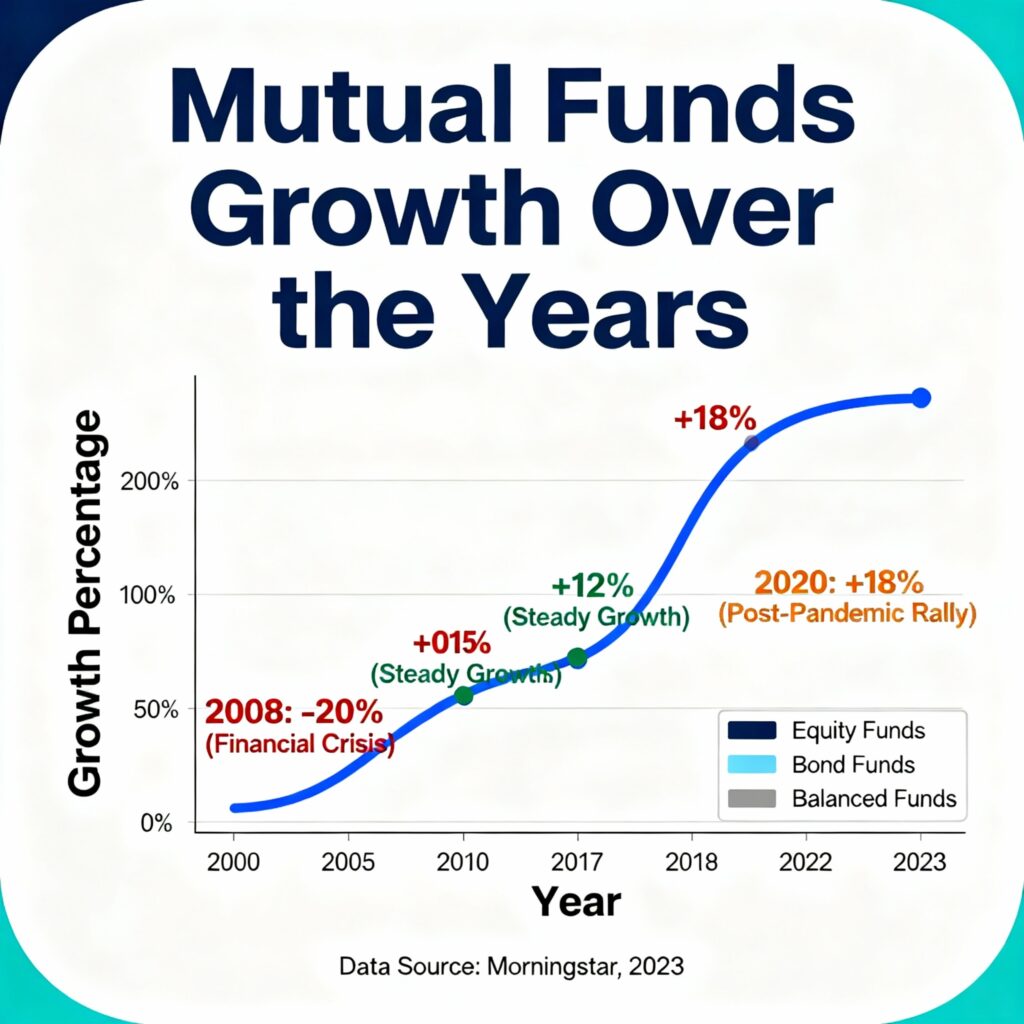
Even the global financial crisis couldn’t kill the enthusiasm. Sure, returns saw a bump (or a dip), but SIPs made it painless for people to stick around, building wealth steadily through every storm.
The Growth Juggernaut: 2014–2025
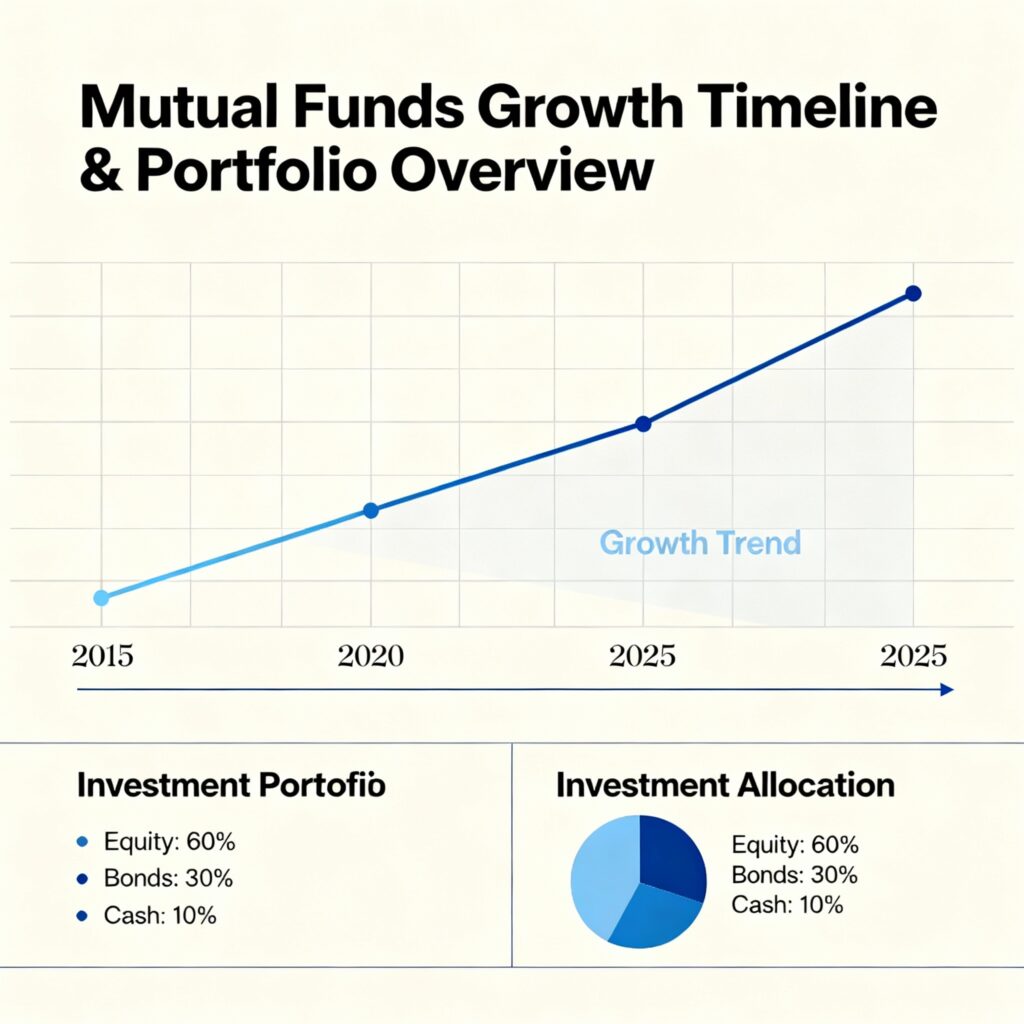
Here’s where things got wild. From a modest ₹10 trillion AUM in 2014, mutual funds have ballooned to over ₹52.74 trillion by 2024. The number of SIP accounts leapt from 8 crore to nearly 17 crore. It’s not just the metros—a massive shift happened in Tier 2 and 3 cities, as digital platforms, influencers, and regulators pushed mutual funds into the mainstream.
“Mutual Funds Sahi Hai”—remember that slogan? It didn’t just trend; it turned mutual funds into aspirational products for young savers and Gen Zs entering the workforce.

How Have Returns Trended Over the Years?
Mutual funds are all about performance, and the numbers tell a compelling story. Let’s break it down:
-
Equity Funds: Historically, equity mutual funds have delivered returns averaging 12–15% over long periods (10+ years), with many top funds outperforming benchmarks during bull runs.
-
Debt Funds: Lower returns, but still better than most savings accounts, especially in falling interest rate cycles.
-
Hybrid Funds: A little bit of this, a little bit of that—returns hover between debt and equity, giving cautious investors a smoother ride.
You’re likely to see stories of investors who started with ₹10,000 SIPs in 2005 and now see corpus values in lakhs and crores, thanks to long-term compounding.
Major Milestones & Innovation
-
Birth of SIP: Made investing accessible for all
-
Technology: Digital platforms let you buy/sell with a swipe
-
Fund reclassification: SEBI cleaned up “fund jungle” in 2017
-
Demographic shift: Young investors, women, and Tier 2/3 cities fueling growth
-
Data transparency: AMFI and SEBI publish regular performance reports, making comparisons easy
Personal Anecdote: How Mutual Funds Changed My Family’s Future
When my dad started a SIP in 1998—it was just ₹500 a month. Fast-forward 20 years, and that modest investment paid for my brother’s college and my first car. That’s the magic of long-term “lazy investing”—staying put and letting compounding do the heavy lifting.
By the way, our family still debates equity vs. debt over dinner, but everyone agrees: mutual funds made wealth possible for people who thought investing was only for the rich.
FAQ: Mutual Funds Over the Years
How have mutual funds grown in India?
From one fund in 1963 to hundreds of schemes and ₹52.74 trillion AUM in 2024—thanks to regulations, innovation, and mass adoption.
What triggered mutual fund popularity?
SIPs, improved access, and campaigns like “Mutual Funds Sahi Hai” made investing simple and trustworthy for the masses.
Are mutual funds still good for beginners?
Absolutely! SIPs, digital support, and transparent performance make them ideal for first-time investors.
What’s the average long-term return?
Top equity mutual funds average 12–15% returns for investors who stay the course.
How did SEBI change the game?
SEBI brought transparency, protection, and fund classification that keeps both investors and fund managers accountable.
Final Thoughts: The Road Ahead
Honestly, mutual funds have become the backbone of household finance, democratizing wealth and empowering every investor with the tools for success. From their UTI origins to digital investing, their story is about adapting, growing, and riding the ever-changing waves of the market.
So, if there’s one thing years of mutual fund history teaches, it’s this: patience and discipline reward those who stick around. Are you ready for the next chapter?
Call to Action
Share your mutual fund milestones and memories—did a SIP pay for your dreams, or are you just getting started? Drop your stories, questions, and tips in the comments below. Let’s inspire the next wave of investors together!