
Mutual Funds Above the S&P 500: Beating the Market, One Smart Pick at a Time
Let’s be real for a second — most investors dream of doing one thing: beating the market.
We’ve all had that moment, staring at the S&P 500 chart climbing steadily, thinking, “Could I outsmart this thing?” And while most people don’t (honestly, few do), there are mutual funds that consistently manage to outpace the mighty index. They’re the quiet champions — not flashy, but smart, efficient, and well-managed.
So, if you’ve been wondering how some mutual funds stay a step ahead of the S&P 500, grab a cup of coffee. Because this story isn’t just about numbers — it’s about strategy, timing, and the fascinating world of fund management.
First Things First — What’s the S&P 500, and Why It Matters
If you’ve ever tuned into CNBC, read a headline about “the markets rising,” or seen a chart plastered across social media, you’ve probably encountered the S&P 500.
It’s basically the scoreboard of the U.S. stock market — a collection of 500 leading companies across sectors, like Apple, Microsoft, Amazon, and even McDonald’s. When financial pros say “the market,” this is usually what they mean.
Now here’s the twist: many investors aim to “beat the S&P.” Why? Because its performance serves as the gold standard for returns. If your investments earn more than the S&P 500, you’re officially outperforming the market itself.
Sounds tempting, right?
The Eternal Question: Can Mutual Funds Really Beat the S&P 500?
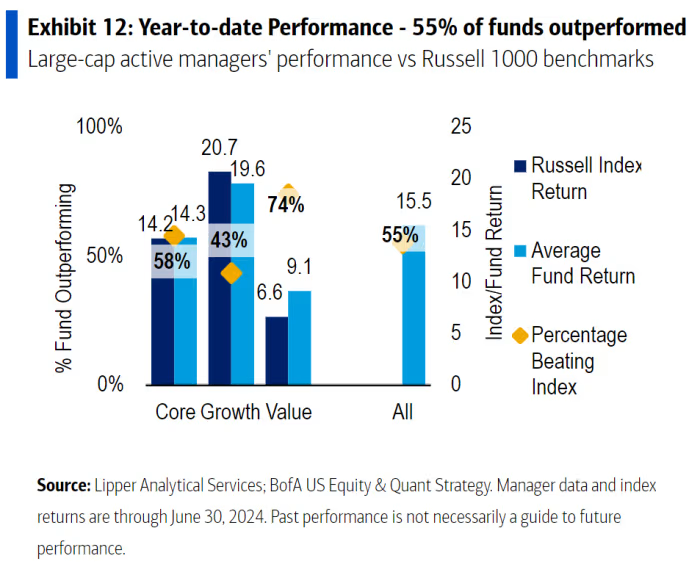
Short answer? Yes, but not all do — and not all the time.
The S&P 500 historically delivers around 8–10% annualized returns over the long run. That means to beat it, a mutual fund needs exceptional management, strategy, and timing (plus some luck).
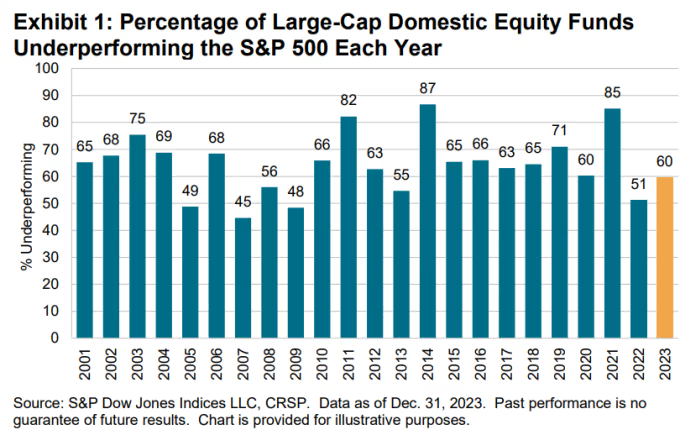
But here’s the catch: while many funds aim to outperform the index, only a few consistently pull it off. According to S&P Dow Jones research, around 80% of actively managed mutual funds underperform the S&P 500 over 10 years.
That remaining 20%, though? That’s where things get exciting — because those funds don’t just beat the market; they redefine what smart investing looks like.
My Turning Point: Discovering “Above Market” Funds
A few years ago, I was one of those investors who only believed in index funds. “Why bother picking mutual funds?” I thought. “You can’t beat the S&P long-term.”
Then, one day, a friend showed me his portfolio. His mid-cap mutual fund had been crushing it — consistently outperforming the benchmark for five straight years. I was intrigued.
That sent me down the rabbit hole of researching funds that go against the grain. I’m talking about managers who defy standard patterns, spot underpriced gems, and hold steady when others panic.
That discovery was my investing awakening.
What Kind of Mutual Funds Outperform the S&P 500?
Not all mutual funds are created equal. Some are built to track the S&P, while others are crafted to beat it.
Here’s how those winners usually stand out:
1. Actively Managed Equity Funds
These funds have seasoned managers who make strategic decisions — buying undervalued stocks or exiting underperformers before they become dead weight.
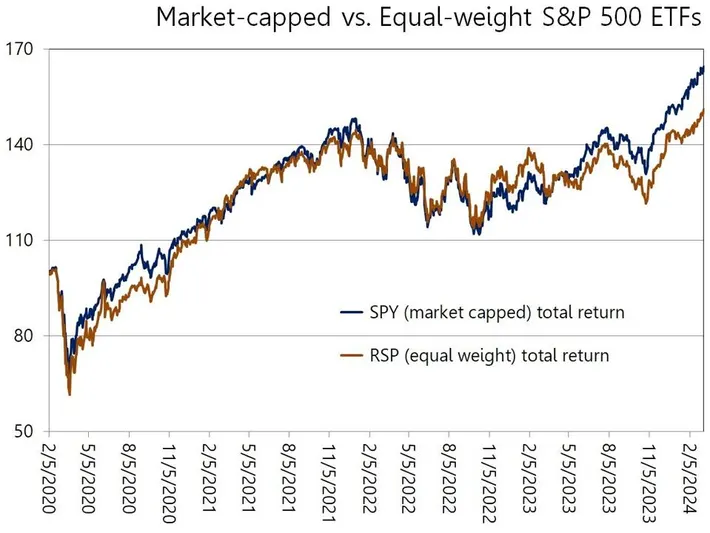
While index funds ride the market wave, active funds pick their surf spots carefully. Examples include funds that focus on growth companies, mid-cap leaders, or emerging sectors missed by large indices.
2. Sector-Specific Funds
Ever noticed how certain sectors take off before anyone catches on? Funds focusing on hot sectors — like technology, healthcare, semiconductors, or green energy — often race ahead of broad-market indexes.
When tech boomed post-pandemic, some focused funds nearly doubled S&P returns.
3. Small-Cap and Mid-Cap Funds
Here’s where the real thrill is. Smaller companies, though riskier, often show higher growth potential than the S&P’s large-cap giants. Fund managers fishing in this pond can deliver higher multipliers when they pick right.
4. Flexible or Multi-Cap Funds
These funds give fund managers full freedom to invest across large, mid, and small-cap spaces. It’s like letting a chef choose their ingredients freely — the magic shows in the results.
A Look at Real Funds That Beat the S&P 500
Here are some mutual funds (and a few ETFs) that have outperformed the S&P 500 over the last decade or more (as of late 2025):
| Fund Name | Type | 10-Year Annualized Return | Expense Ratio | Key Holdings |
|---|---|---|---|---|
| Fidelity Contrafund (FCNTX) | Large Growth | 12.5% | 0.85% | Meta, Amazon, Berkshire Hathaway |
| T. Rowe Price Blue Chip Growth Fund (TRBCX) | Growth | 13.1% | 0.70% | Microsoft, Nvidia, Alphabet |
| Vanguard Dividend Growth Fund (VDIGX) | Dividend | 11.3% | 0.26% | Johnson & Johnson, Microsoft, PepsiCo |
| Schwab U.S. Mid-Cap Index Fund (SWMCX) | Mid-Cap | 11.8% | 0.04% | Mid-size growth firms |
| Primecap Odyssey Aggressive Growth Fund (POAGX) | Aggressive Growth | 13.9% | 0.63% | Chipotle, Eli Lilly, Nvidia |
While the S&P 500 hovered around 10% annualized returns, these funds delivered 11–14%. Doesn’t sound huge? Think again. Compounded over 15 years, that gap can mean hundreds of thousands of dollars.
The Magic of Compounding: How 2% Makes a Big Difference
Let’s do a quick mental math exercise.
Suppose you invest $50,000 and earn:
-
10% (typical S&P 500 average) — you end up with around $209,000 after 15 years.
-
12% (from a fund beating the S&P) — you’d have roughly $273,000.
That “tiny” 2% difference? It’s worth over $60,000 extra.
Honestly, that’s like getting a free luxury vacation every year for a decade — just because you chose the right fund.
What Helps These Funds Stay Above the Benchmark
Here’s what sets outperformers apart:
-
Active decision-making: Flexibility to pivot during downturns or capitalize on sector rotation.
-
Strong research backbone: Fund houses like Fidelity, T. Rowe Price, and Vanguard rely on deep market insights.
-
Long-term holding philosophy: The best funds don’t chase trends; they hold value.
-
Experienced fund managers: Humans still matter — the best ones combine intuition with analytics.
-
Smart diversification: Balanced exposure across geographies and industries.
They don’t just copy the index—they outthink it.
But… There’s Always Another Side
Let’s talk about the elephant in the room: risks and costs.
-
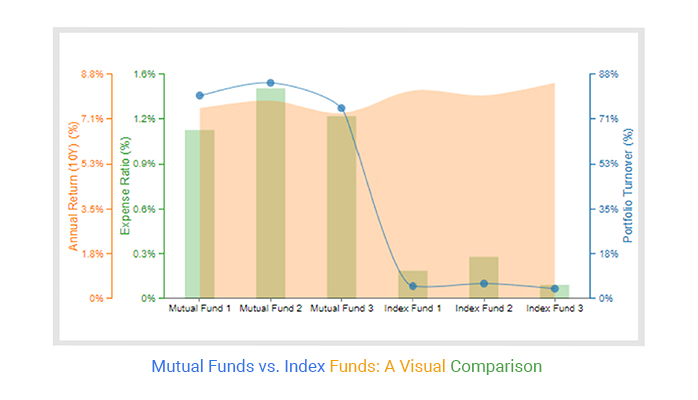
Expense ratios are higher for active mutual funds (usually 0.5–1%) compared to 0.03% for index funds.
-
Underperformance risk: Even good funds can have off years.
-
Manager dependency: A star manager leaving the fund can impact results.
So yes, chasing outperformance demands patience and trust. Think of it like backing a great chef—most days, the food’s amazing. Some days? Not so much.
How to Identify a Strong Performer
If you’re wondering, “Okay, but how do I pick a mutual fund that beats the S&P?”, here’s a checklist that works for seasoned pros too:
-
Check 5- to 10-year consistency. A one-year outperformance can be luck. Longevity matters.
-
Look for lower drawdowns. How well did the fund hold during market crashes?
-
Analyze expense ratios. Lower costs mean more of your returns stay with you.
-
Study the fund manager’s history. Their decisions shape the returns more than you think.
-
Review holdings. Are they in emerging sectors or stuck in yesterday’s winners?
By the way, don’t forget to compare them against their category averages, not just the S&P 500. That gives more context.
Personal Story: The Year My Portfolio Beat the Market
2021 — a wild year for markets, right? Inflation fears, rate hikes, tech rallies, and corrections — a rollercoaster from start to finish.
That year, while the S&P 500 returned about 27%, one of my funds, the T. Rowe Price Blue Chip Growth Fund, gave me over 35%.
The reason? Its exposure to Nvidia and Tesla during the AI and EV wave. The fund manager had increased allocations months before those stories exploded. It felt like finding a backstage pass before the concert went viral.
That’s the brilliance of an active, research-driven mutual fund. They often see the trend before the headlines do.
Expert Insights: Why Consistent Outperformance Is So Rare
Even experts agree that beating the S&P 500 isn’t easy. Warren Buffett once famously bet that a simple S&P 500 index fund would outperform most hedge funds over ten years — and he won that bet.
So why do some mutual funds still succeed?
-
They exploit inefficiencies. Mid-cap or emerging sector gaps the index overlooks.
-
They stay disciplined. They avoid FOMO-driven buys.
-
They adapt. While the index is static, active funds pivot.
The trick isn’t competing with the market daily — it’s aligning with cycles that the market doesn’t yet see.
FAQs About Mutual Funds Above the S&P 500
1. Can mutual funds consistently outperform the S&P 500?
Only a small group of active funds do so consistently. Most struggle due to higher costs or unpredictable markets.
2. Should I replace my index fund with one of these?
Not necessarily. A good balance is ideal — 70% index funds, 30% active ones for potential alpha.
3. How do I track whether my fund’s beating the S&P?
Compare your fund’s CAGR against S&P 500’s over equivalent periods (1-, 5-, 10-year).
4. Are tech-focused funds better at outperforming?
Historically, yes — especially during innovation cycles. But they can be volatile in downturns.
5. What’s the biggest mistake investors make?
Chasing past performance blindly. A fund that beat the S&P last year may not repeat it tomorrow.
Final Thoughts: Outperforming the Market Isn’t About Luck — It’s About Discipline
Here’s what years of watching markets taught me: it’s not the “hottest” fund that beats the S&P 500. It’s the smartest, most patient ones.
The world’s top performers balance risk, strategy, and consistency. They think beyond trends and act beyond emotion.
So, the next time someone says, “You can’t beat the market,” smile politely. Because somewhere, a carefully chosen mutual fund is doing exactly that — quietly, steadily, and convincingly.
Your Turn:
Have you ever owned a mutual fund that outperformed the S&P 500? Drop your experience or favorite fund’s name in the comments. Let’s compare notes — maybe you’ve already discovered the next big outperformer!