
Mutual Funds on Schwab: Investing the Smart Way (Without Losing Your Sanity)
You know that moment when you look at your paycheck and think, “There’s gotta be a better way to make my money work for me?” Yeah, that’s where it all begins. Enter mutual funds — your ticket to long-term wealth without having to stare at stock charts every day. And when it comes to investing smartly, Charles Schwab is the name that keeps popping up in the conversation — and for good reason.
If you’ve ever wondered how mutual funds on Schwab differ from the rest, or how to make the most of them, buckle up. We’re diving deep — with stories, humor, insider tips, and a few helpful warnings too.
My First Time on Schwab (And a Bit of Panic)
I’ll admit it — my first experience with Schwab’s platform was a mix of excitement and mild panic. I had heard about transparency, low costs, and a buffet of funds to pick from. But when I logged in for the first time, it felt like walking into a candy store with a million flavors.
By the way, that feeling? Completely normal.
It took me a few hours (and cups of coffee) to realize that Schwab’s platform is like a trusty navigation app — overwhelming at first but incredibly intuitive once you start. After that, I was hooked. Fast-forward a few years, and Schwab’s mutual funds have become my go-to choice whenever I want diversification and peace of mind.
What Are Mutual Funds, and Why Schwab?
Before we jump into Schwab-specific details, let’s get the basics straight.
A mutual fund pools money from multiple investors to buy a diverse mix of stocks, bonds, or other assets. Think of it like joining a food platter where everyone chips in, and everyone gets a variety.
Now, here’s where Charles Schwab comes in — a trusted investment platform that’s been around since the 1970s. They’ve built their reputation on affordability, transparency, and user-focused innovation. Schwab offers its own in-house mutual funds alongside thousands of third-party options, letting investors build custom portfolios without breaking a sweat.
Why Everyone’s Talking About Schwab Mutual Funds
A few things make Schwab stand out in the mutual fund universe:
-
Low expense ratios – Because every penny saved goes right back to you.
-
No-load funds – No sneaky commission cuts for brokers.
-
Zero minimums on several funds.
-
Huge fund variety – Stocks, bonds, balanced, international — you name it.
-
Award-winning research tools – So you actually understand what you’re investing in.
Honestly, Schwab is that dependable friend who doesn’t charge you for every coffee you share. You can start slow, stay disciplined, and grow your wealth comfortably.
Types of Mutual Funds You Can Buy on Schwab
Schwab doesn’t just dump all funds into a single basket. It categorizes them smartly so you can choose based on your goals, risk tolerance, and timeline. Let’s break it down.
1. Schwab Market Index Funds
Prefer slow-and-steady instead of high-stakes gambling? Schwab’s index funds are your best bet. These funds mirror well-known market indexes like the S&P 500 — you get broad exposure at a rock-bottom cost.
Popular examples:
-
Schwab S&P 500 Index Fund (SWPPX)
-
Schwab Total Stock Market Index Fund (SWTSX)
-
Schwab International Index Fund (SWISX)
They’re boring in the best possible way — predictable, reliable, and cheap.
2. Schwab Target Date Funds
If you’ve got retirement dreams (who doesn’t?), these are like your financial autopilot. You pick your retirement year — say 2040 — and Schwab takes care of the rest. Over time, the fund automatically shifts from high-growth investments to safer ones.
Examples:
-
Schwab Target 2040 Fund (SWENX)
-
Schwab Target 2050 Fund (SWYEX)
It’s plug, play, and forget — until you’re sipping cocktails at 65.
3. Schwab Active Mutual Funds
Want a bit of strategy? Schwab’s actively managed funds bring in experts who scan markets daily, pick stocks, and rebalance to outperform benchmarks.
Standouts include:
-
Schwab Dividend Equity Fund (SWDSX)
-
Schwab Balanced Fund (SWOBX)
-
Schwab Small-Cap Equity Fund (SWSCX)
These are great if you want the comfort of active management but the cost-effectiveness Schwab is known for.
4. Third-Party Mutual Funds
Schwab’s not possessive about its own offerings. It provides access to over 5,000+ third-party funds from heavyweights like Fidelity, Vanguard, and T. Rowe Price. You can mix and match these with Schwab’s funds to design your dream portfolio.
Think of it like Spotify playlists — a little variety never hurts.
How to Invest in Mutual Funds on Schwab
Buying a mutual fund on Schwab is simpler than brewing your morning coffee.
-
Log Into Your Schwab Account.
-
Head to Trade > Mutual Funds.
-
Search by name, symbol, or fund type.
-
Read the details — returns, expense ratio, performance graph.
-
Choose between one-time purchase or automatic investment plan (AIP).
-
Confirm, invest, and congratulate yourself!
Automatic investing is a gem, by the way. You can schedule contributions monthly and let compounding quietly do its thing in the background.
The Beauty of Compounding on Schwab
You invest $200 monthly into a Schwab index fund returning an average of 8% annually. Fast-forward 25 years — that’s nearly $180,000 from just $60,000 invested. Not magic. Math.
And compounding loves consistency — miss one month, and the math sulks.
So the real trick? Start early, stay consistent, and let time be your partner.
Schwab vs. Other Platforms: Who Wins?
Let’s play a quick comparison game because the market’s crowded, and you deserve to know where Schwab stands.
| Platform | Expense Ratio Range | No-Load Funds | Research Tools | Account Minimum |
|---|---|---|---|---|
| Charles Schwab | 0.02% – 0.75% | Yes | Excellent | $0 |
| Fidelity | 0% – 0.85% | Yes | Excellent | $0 |
| Vanguard | 0.04% – 0.90% | Limited | Great | $1,000+ |
| TD Ameritrade | 0.05% – 1.0% | Yes | Good | $0 |
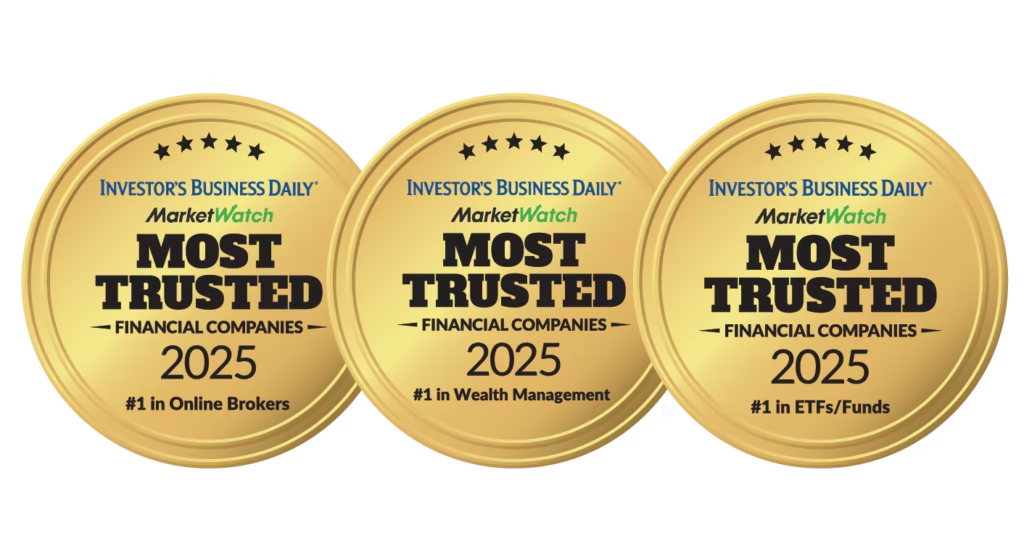
Schwab leads with flexibility, low-cost funds, and powerful online tools suited for both beginners and seasoned investors. Plus, with its customer service reputation, you won’t be left hanging if you ever need help.
Expert Take: Why Financial Gurus Respect Schwab
It’s not just hype. Financial pros frequently point out two key strengths:
-
Investor-first philosophy – Schwab eliminated commissions on online fund trades years before others followed.
-
Research transparency – Portfolio performance, risk rating, expense ratios, and holdings are clearly explained.
Basically, you’re never flying blind.
The Schwab Fund Story: Built for Every Investor
One of the coolest things about Schwab is accessibility. Whether you’re a twenty-something starting fresh or in your 60s optimizing taxes, there’s a fund for you.
You can tailor by:
-
Goal: growth, income, or stability.
-
Timeframe: short-term vs. long-term plans.
-
Risk: conservative, moderate, or aggressive.
It’s like ordering pizza — customize it until it feels perfect.
Fees and Tax Talk
Schwab offers some of the lowest-cost funds you’ll find. Many of their proprietary mutual funds have zero minimums and expense ratios under 0.05%. You won’t find hidden fees lurking in fine print, either.
Tax-wise:
-
Mutual fund dividends are taxed as income.
-
Capital gains apply when you sell shares at a profit.
-
Retirement accounts (IRAs, 401(k)s) can defer taxes on gains and dividends.
If you’re confused, Schwab’s tax tools make it easier than explaining crypto to your dad.
Schwab Mutual Fund Screeners and Tools Worth Using
Schwab has research tools that even my most tech-resistant friend learned to love.
You can:
-
Compare up to 5 funds side-by-side.
-
Filter by risk, sector, or objective.
-
Access Morningstar ratings and analyst insights.
-
Get personalized fund suggestions based on your risk profile.
It’s like having a digital financial advisor whispering suggestions while you sip your coffee.
Should You Pick Active or Passive Funds?
Here’s where opinions split. Active funds are like hiring a pro racecar driver; passive funds are like using autopilot on a Tesla.
Active funds may beat the market — but at a higher cost. Passive funds, on the other hand, mirror the market with lower fees.
Most experts (and many Schwab fans) combine both: passive funds for the core portfolio, active funds for extra flavor.
That blend creates the perfect balance between ambition and prudence.
My Personal Journey with Schwab Mutual Funds
I’ll keep it real — I started small. My first fund? SWPPX, Schwab’s S&P 500 Index Fund. It was the financial version of dipping my toes before diving in.
Months later, I added a Schwab Dividend Equity Fund for steady returns. Watching dividends grow, get reinvested, and multiply over the years — it’s oddly satisfying.
No flashy trades. No daily stress. Just quiet, consistent progress — the kind of investing that lets you sleep peacefully.
Common Mistakes to Avoid
A few lessons I learned the hard way:
-
Don’t chase past performance. Yesterday’s winner could be tomorrow’s snoozer.
-
Don’t invest without a goal. Know your why before your where.
-
Review yearly. Adjust allocations as life changes.
-
Avoid emotional selling. Markets dip — sanity shouldn’t.
Schwab’s learning center even has real investor stories showing how overreaction kills long-term growth. It’s worth a look.
FAQs About Mutual Funds on Schwab
1. Are Schwab Mutual Funds free to trade?
Yes. Most Schwab mutual funds have no transaction fees or load charges.
2. What’s the minimum to start investing?
Many Schwab funds have zero minimums. You can begin today with practically any amount.
3. Is Schwab’s platform beginner-friendly?
Absolutely. The interface, research resources, and guidance tools make it ideal for first-timers.
4. Can I automate my investments?
Yes. Schwab’s Automatic Investment Plan lets you set recurring contributions to mutual funds.
5. Are Schwab funds better than Vanguard or Fidelity?
That depends on your goals. Schwab offers equal quality with added flexibility and lower minimums.
Final Thoughts: The Schwab Advantage
Investing in mutual funds on Schwab feels like driving a hybrid car — efficient, smooth, and quietly powerful. It’s not about chasing adrenaline; it’s about achieving freedom.
You don’t need to be a Wall Street genius. You just need clarity, patience, and a platform that’s got your back — and that’s what Schwab offers.
By the way, if you’ve been putting off investing because it “seems complicated,” trust me — Schwab makes it almost too easy. Log in, start small, and let the magic of compounding handle the drama.
Because one day, years from now, you’ll look at your account and smile — realizing that your ‘future self’ just sent you a thank-you note in the form of financial freedom.
Ready to begin your Schwab story?
Tell me in the comments — are you already investing in mutual funds, or still exploring options? Let’s talk money, mistakes, and milestones together.