
What Is Loan Disbursement? (And Why It’s the Moment You’ve Been Waiting For)
Picture this: you finally get that long-awaited call from your bank. They say, “Your loan has been approved, and we’re ready to disburse the funds.” Suddenly, your mind explodes with joy — maybe it’s the new car, the startup capital, or that dream home finally within reach.
But wait — what exactly is loan disbursement, and how does it actually work behind the scenes? Let’s break it down in plain English (with a dash of humor, because finance doesn’t have to be dry).
What Is Loan Disbursement?
In simple terms, loan disbursement is when the lender actually releases your approved loan amount — either to you directly or to a third party, depending on the type of loan.
Think of it as the “moment of truth.” All the paperwork, verifications, credit checks, and signature marathons lead to this. It’s when the money officially leaves the bank and starts working for you.
Put differently? It’s the difference between “approved” and “paid.”
By the way, a lot of people confuse loan approval and loan disbursement — but they’re as different as being invited to a party versus actually stepping inside.
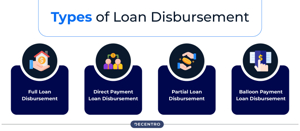
The Loan Disbursement Process (Step by Step)
Alright, let’s walk through it like a mini-story — because trust me, this process can feel like a small adventure.
Step 1: Loan Sanction or Approval
Your lender reviews your application, checks your credit score, verifies your income, and decides if you’re trustworthy (basically, will you pay them back without ghosting?).
Once you pass the lender’s checklist, they issue a loan sanction letter. That’s the green light — but not yet the cash in your account.
Step 2: Document Signing (aka The Paperwork Party)
Next, you’ll sign an agreement that lays out the terms — interest rate, repayment schedule, loan tenure, and the dreaded fine print.
Pro tip: Always double-check the disbursement details here — the amount, payment mode, and timeline are all written clearly.
Step 3: Loan Disbursement Authorization
The lender processes final approvals internally. The credit team, branch manager, and fund department do their little financial relay before anyone hits that “disburse” button.
Step 4: Funds Transfer
And here’s the good part — the actual disbursement. The loan amount is released, typically in one of the following ways:
-
Direct to your bank account (for personal or business loans)
-
To the seller or builder (for home or car loans)
-
In installments or milestones (common for education or construction loans)
When that balance notification hits your phone — oh, that’s the adult version of fireworks.
Real-Life Example: When Loan Disbursement Changes Everything
Let me tell you about a client we’ll call Priya.
She applied for a home loan to finally buy her dream apartment in Pune. The loan got approved, but between legal document checks and property verification, weeks went by. She almost lost hope.
And then one Friday afternoon, her bank emailed her: “Loan Disbursed – ₹45,00,000 Transferred.” Priya said it felt like winning a mini lottery. The next day, she had the keys in her hand — new memories beginning with one financial milestone: loan disbursement.
Moral of the story? It’s not just a transaction; it’s the bridge between dreams and reality.
Different Types of Loan Disbursement
Not all loans are disbursed the same way. Here’s how it varies depending on what you’re borrowing for:
1. Personal Loan Disbursement
Usually a one-shot deal. Once approved, the entire sanctioned amount lands directly in your account. It’s quick — sometimes within 24–48 hours.
2. Home Loan Disbursement
This one’s a marathon, not a sprint. Banks often release funds in parts — known as stage-wise disbursement — depending on construction progress.
For instance:
-
First disbursement when the foundation is done.
-
Second disbursement after walls and structure are up.
-
And so on, until completion.
3. Education Loan Disbursement
Funds usually go directly to the university or institution, not the student. Tuition, accommodation, or other approved costs are covered as per semester timelines.
4. Car Loan Disbursement
Banks disburse funds to the dealer — not you. Once verified, the dealer releases the car keys. Easy peasy (as long as your paperwork’s clean).
5. Business Loan Disbursement
Depending on the type of business loan, disbursement can be a lump sum or tranche-based (especially for project funding).
In startups, lenders often disburse in phases, checking your utilization reports before releasing the next chunk.

How Long Does Loan Disbursement Take?
That’s the million-dollar question (literally, sometimes).
It depends on:
-
Loan type (personal loans are fastest, home loans take longest)
-
Lender policies
-
Verification speed (documents, collateral, etc.)
-
Public holidays (banks move slower when Mondays follow long weekends)
Generally:
-
Personal loans: 1–2 days after approval
-
Home loans: 7–15 days
-
Business loans: 3–7 days
-
Education loans: per semester schedule
If it’s been longer than usual, don’t panic — just call or email your loan manager for an update. Sometimes funds are queued for final release and need manual push-through.
Why Loan Disbursement Can Get Delayed
Yep, delays happen. And when you’re eagerly refreshing your bank app, it’s enough to raise anyone’s blood pressure.
Common reasons include:
-
Incomplete or mismatched documents
-
Pending property valuation or verification
-
Bank holidays or clearance delays
-
Internal audits or compliance flags
-
Changes in your credit score between approval and release
Pro tip: Always submit complete documents upfront. Half the delays happen because something “small” like a missing signature stalls the queue.
The Science (and Math) Behind Loan Disbursement
Here’s something few people think about — disbursement affects when your EMIs start.
Usually, your first EMI date depends on:
-
The date of final disbursement
-
The grace period as per the bank
For example, if your home loan is disbursed on the 20th, your first EMI may start from the 10th or 15th of next month. In partial disbursements, pre-EMI interest applies — meaning you only pay interest on the disbursed amount until full release.
It’s like a warm-up lap before the full race begins.
Loan Disbursement vs. Loan Sanction: The Key Difference
| Basis | Loan Sanction | Loan Disbursement |
|---|---|---|
| Definition | Approval of your loan request by the lender | Actual release of funds to borrower or vendor |
| Timing | Before disbursement | After all checks are cleared |
| Document Issued | Loan sanction letter | Disbursement voucher/confirmation |
| Purpose | Confirms eligibility | Transfers usable funds |
| Analogy | “Yes, you’re invited” | “Here’s the party cake” |
So, yes — approval feels exciting. But real happiness? That comes on disbursement day.
Expert Insights: How to Speed Up Loan Disbursement
Bank insiders say the biggest speed factors are document accuracy and communication. Here are pro tips that actually work:
-
Keep your KYC updated. Outdated Aadhaar or PAN details can cause verification rejections.
-
Double-check your bank details. You’d be shocked at how often a typo delays fund transfer.
-
Respond to lender queries fast. Don’t sit on “please clarify” emails — every hour counts.
-
Follow up courteously. A polite call works wonders over repeat angry emails.
-
Track your application online. Most banks now have live status trackers — use them.
By the way, if a disbursement delay feels suspiciously long, you can escalate it to the bank’s grievance cell or nodal officer.
Common FAQs About Loan Disbursement
What does loan disbursement mean?
It’s when the bank actually releases your approved loan amount, either to you or a third party like a builder, college, or dealer.
How long after approval is the loan disbursed?
Depends on the loan type — personal loans: 1–2 days, home loans: 7–15 days, business loans: 3–7 days on average.
What is partial disbursement?
When funds are released in stages based on progress (like construction), instead of all at once.
Who receives the disbursed loan amount?
For personal loans, you. For others (like car or home loans), the funds often go straight to the seller, builder, or vendor.
Can a loan disbursement be canceled?
Yes, but only before disbursement. Once released, it’s considered activated and must follow repayment terms.
Does EMI start immediately after disbursement?
Usually from the next billing cycle. For partial disbursements, only pre-EMI interest applies until full release.
The Emotional Side of Loan Disbursement
Honestly, getting a loan approved feels great — but seeing that money arrive? That’s pure serotonin. It’s the point where dreams turn tangible.
Whether it’s a college fund, your first business, or owning four walls and a roof that say “you’ve made it” — disbursement is that beautiful moment of realization.
It’s financial freedom, in action form.
Final Thoughts: Disbursement Is Just the Beginning
When the funds finally hit your account, it’s not the end of your financial story — it’s just the next chapter.
Use the amount wisely. Track your EMIs. Avoid late payments. And remember, a loan is not a burden; it’s a tool — if used smartly, it can literally build your future.
By the way, if you’ve just crossed this milestone, celebrate — responsibly, of course. And if your disbursement is still “processing,” hang tight. Great things take time.
Call-to-Action:
Have you experienced your own loan disbursement journey — smooth or bumpy? Share your story in the comments below. Your experiences might help someone else about to take the same leap.