
What “loan knowledge” really means
Loan knowledge is simply understanding how borrowing money works: interest, tenure, EMI, fees, risks, and your rights as a borrower. Once you get these fundamentals, every offer—personal loan, home loan, credit card EMI—starts to make sense instead of sounding like magic jargon.
Think of it like learning to read a food label. At first it’s confusing, but once you know what sugar, fat, and calories mean, you instantly see what’s “healthy” and what’s junk. Loans are the same: the label is your loan agreement.
Quick loan basics (for total beginners)
-
A loan is money you borrow now and repay later with extra (interest).
-
Principal = the amount you borrow.
-
Interest = the price you pay for using that money.
-
EMI (Equated Monthly Installment) = fixed amount you pay every month till the loan ends.
-
Tenure = how long you’ll be paying (in months/years).
Honestly, once you understand that your EMI is basically “rent” you pay for using someone else’s money, things start to click. The longer you “rent” it (long tenure), the more total rent you pay (more interest).

Types of loans you’ll actually meet in real life
Personal loans
These are like the “Swiss army knife” of loans—no collateral, quick approval, used for almost anything: weddings, emergencies, travel, debt consolidation, you name it.
-
Usually have higher interest rates than home or car loans because they’re unsecured (no security).
-
Tenure is usually short to medium (1–5 years).
They feel convenient, but convenience is never free. You pay for speed and flexibility with higher interest.
Home loans
Home loans (mortgages) are long-term loans to buy or build property.
-
Lower interest because your house itself is the collateral.
-
Very long tenures (15–30 years), so EMIs can be “affordable” but total interest can be huge.
Taking a home loan is less like buying a gadget and more like entering a long-term relationship. You don’t just pick the prettiest offer; you pick the one you can live with for decades.
Car / auto loans
These are secured loans where the car is the collateral.
-
Medium tenure (3–7 years).
-
Interest is usually between personal loan and home loan rates.
Remember: a car is a depreciating asset. It’s like taking a loan for something that slowly melts in value every year. Borrow carefully here.
Education loans
Meant for higher studies, often with a moratorium period (you start paying after course completion).
In theory, this is “good debt” because it funds your earning potential. But only if the course and expected salary make sense. Borrowing a massive amount for a course with low job prospects is like buying gym equipment you never use—expensive guilt.
Credit card loans & BNPL
Credit cards, “convert to EMI,” and Buy Now Pay Later (BNPL) are basically mini-loans in disguise.
-
Super convenient.
-
Often high interest if you don’t pay on time (especially revolving credit).
Treat credit cards like a sharp knife: very useful in the kitchen, very dangerous if you wave it around blindly.
Secured vs unsecured loans (simple explanation)
| Type | Backed by collateral? | Typical examples | Interest level | Risk if you default |
|---|---|---|---|---|
| Secured | Yes | Home, car, gold loans | Lower | Asset can be taken/sold |
| Unsecured | No | Personal, credit cards | Higher | Legal / credit score impact |
Secured loans say, “If you can’t pay, I’ll take this asset.” Unsecured loans say, “If you can’t pay, your creditworthiness and peace of mind will suffer.” Both can hurt; just in different ways.
Fixed vs floating interest
-
Fixed rate: Same interest throughout the tenure. EMI stays stable. Easy to plan.
-
Floating / variable rate: Interest can go up or down depending on market or reference rates.
If you hate surprises, fixed might calm your nerves. If you’re okay with some uncertainty (and potential savings when rates drop), floating can work, especially for long-tenure loans.

How EMI really works (and why early years feel painful)
Most loans use reducing balance with an amortization schedule.
-
Early EMIs: big chunk = interest, small chunk = principal.
-
Later EMIs: interest part reduces, principal part increases.
So when you look at your loan after 2–3 years and think, “Why has my principal barely moved?”—you’re not crazy. That’s exactly how it’s designed. Extra payments early in the tenure have a massive impact on total interest.
Common loan terms you shouldn’t ignore
When you read a loan offer, focus on more than just the EMI. Key things:
-
Interest rate (APR, if given).
-
Processing fee (one-time charge).
-
Prepayment / foreclosure charges.
-
Late payment penalties.
-
Insurance bundling (sometimes optional, sometimes pushed aggressively).
A loan with slightly higher interest but zero prepayment penalty can be cheaper in real life than a low-interest loan that locks you in.
How loans affect your credit score
Your credit score (or credit report) is your financial report card. Lenders use it to judge how risky it is to lend to you.
Loans impact your score in three big ways:
-
Payment history – paying on time is gold.
-
Credit utilization – especially on credit cards.
-
Credit mix & age – variety and length of history help.
A well-managed loan can actually build your score and make future borrowing cheaper. Messy behavior (late EMIs, skipping payments) does the opposite.
“Good debt” vs “bad debt” (real talk)
There’s no official legal label called “good” or “bad” debt. It’s more about purpose and impact.
Good-ish debt (when used wisely):
-
Funding education that realistically boosts your income.
-
Buying a home within your budget.
-
A business loan that helps you generate profit.
Bad-ish debt:
-
High-interest loans for lifestyle flex (latest phone, random shopping).
-
EMIs stacked beyond what you can comfortably repay.
Ask one brutal question before you borrow: “Will this loan help future-me or just impress people who don’t pay my bills?”
Red flags in loan offers
By the way, not all loan ads are your friends. Watch out for:
-
“Instant loan, no documents, no checks” – usually crazy expensive or shady.
-
Very low teaser rates that jump after a few months.
-
High processing fees that eat into what you actually receive.
-
Pressure tactics: “Offer only for today!”
If an offer sounds too good to be true, it usually is. Legit lending and risk assessment take a bit of effort.
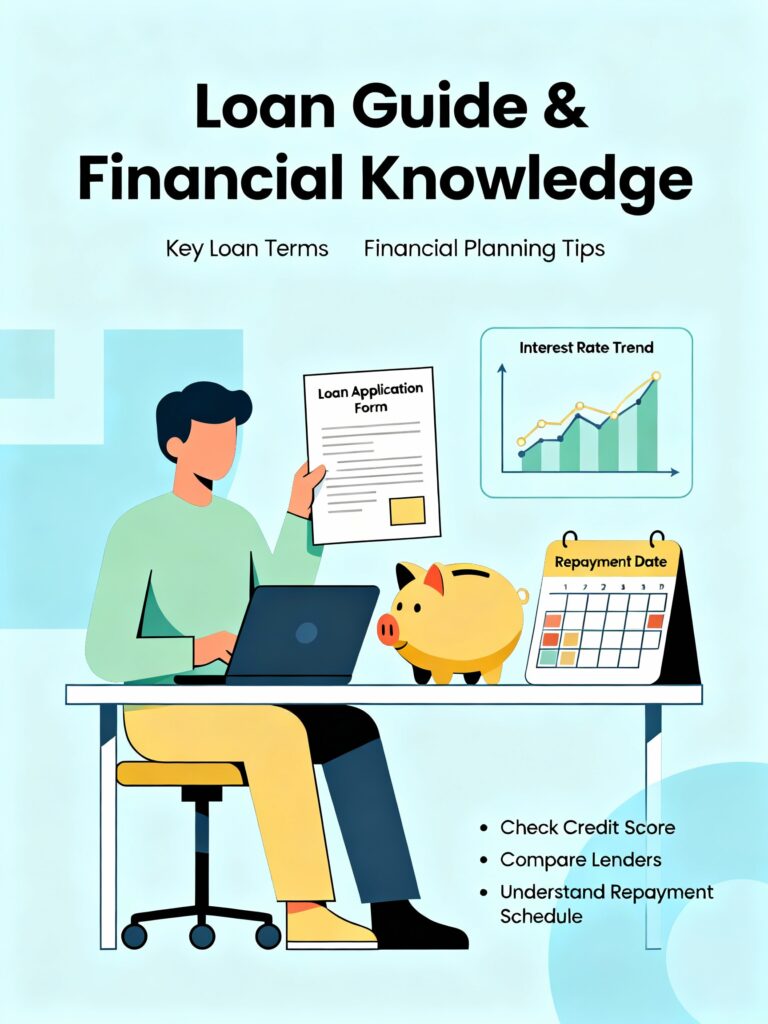
How to choose the right loan (step-by-step)
-
Define the “why” clearly
-
Emergency? Education? Asset purchase? Debt consolidation?
-
If it’s a pure impulse, pause.
-
-
Check your cash flow
-
Add up all mandatory monthly expenses.
-
Decide EMI limit (many experts suggest EMIs not exceeding about 30–40% of your take-home income).
-
-
Compare total cost, not just EMI
-
Look at interest rate, tenure, processing fees, insurance, penalties.
-
Use any online EMI calculator to compare scenarios.
-
-
Shortlist 2–3 lenders
-
Check reviews, support quality, app experience, and terms.
-
-
Read the agreement slowly
-
Especially clauses on prepayment, defaults, interest changes, and charges.
-
This sounds like a lot of work, but it’s cheaper than years of regret.
Smart ways to reduce interest burden
Here’s where “loan knowledge” makes you money instead of costing it:
-
Choose the shortest tenure you can comfortably afford. Lower tenure = less total interest.
-
Prepay when you get bonuses/windfalls, especially in early years.
-
Avoid frequent refinancing just for lower EMI if the tenure keeps extending; you might pay more in the long run.
-
Don’t take the maximum amount just because you’re eligible. Take what you truly need.
Think of interest like leaks in a bucket. Every prepayment you make plugs a small leak.
When not to take a loan
Skipping a loan can be the smartest move sometimes. Consider saying “no” when:
-
You’re already juggling multiple EMIs.
-
Your income is unstable or uncertain in the near future.
-
The purchase is purely status-driven, not need-driven.
-
You’re using one loan to repay another over and over (classic debt spiral signal).
If a loan is solving a problem you created with another loan, you might need a strategy reset, not another EMI.

Debt traps: how people accidentally fall in
It usually doesn’t start dramatic. It goes like this:
-
You take a small personal loan or swipe a card.
-
Then another for “just this one thing.”
-
Then an emergency hits.
-
Suddenly, 40–60% of your income is going towards EMIs.
At that point, you’re not using money; money is using you. The way out usually includes budgeting hard, negotiating with lenders, maybe consolidating high-interest loans into a more structured, lower-rate one—and stopping new borrowing till the fire is under control.
Using loans strategically (not fearfully)
Loans aren’t evil. They’re tools. A hammer can build a house or break a window; it depends on how you use it.
Strategic borrowing means:
-
Matching loan type to goal (home loan for house, not personal loan for home down payment plus credit card for furniture).
-
Planning exit paths—knowing how and when you’ll finish or prepay the loan.
-
Using debt to create assets or income more often than liabilities and vanity purchases.
Loan knowledge for freelancers & remote workers
If your income fluctuates (freelancer, gig worker, remote contractor), borrowing needs extra caution.
-
Don’t assume your current best month = your future normal.
-
Keep a bigger emergency fund before taking long-term EMIs.
-
Prefer flexible products or smaller-ticket, shorter-tenure loans you can kill quickly.
One missed EMI here or there can mess with your credit score, and that comes back to bite when you actually need a serious loan (like a home loan).
EEAT: showing real expertise in loan decisions
From a Google EEAT perspective, what matters in your own financial life is similar to what matters in online content:
-
Experience – Have you handled money, EMIs, and budgets yourself?
-
Expertise – Do you understand basic concepts like interest, credit scores, and repayment strategies?
-
Authoritativeness – Are you relying on credible sources, calculators, and regulated lenders?
-
Trustworthiness – Are you honest with yourself about your income, spending, and risks?
Treat your financial decisions like publishing something under your name on the internet—you want future-you to look back and think, “Yep, that was responsible,” not “What was I thinking?”
Mini FAQ for quick answers (Featured Snippet friendly)
What is the safest type of loan?
Generally, loans from regulated banks or NBFCs for clear, productive purposes (like home or education) with transparent terms are safer than shady instant lenders or extremely high-interest credit products. Safety also depends on your ability to repay on time.
How much EMI is “too much”?
A common rule of thumb is to keep total EMIs within roughly 30–40% of your take-home income so you still have room for living expenses, savings, and emergencies. If you’re constantly stretching or skipping savings to pay EMIs, it’s probably too much.

Is it okay to take a loan for a phone or vacation?
Financially, it’s riskier because these don’t generate income and lose value fast. If you’re already tight on cash or have other EMIs, it’s usually better to save first instead of borrowing for short-term pleasures.
Should I prepay my loan early?
If there are low or zero prepayment penalties and you have a solid emergency fund, prepaying a high-interest or long-tenure loan can save a lot on total interest. Always check your agreement terms first.
Does taking a loan improve my credit score?
Yes, it can, if you pay on time consistently. A well-managed loan builds your repayment history and can improve your credit profile over time. Late or missed payments, however, damage your score.
Your next step (CTA)
If you’ve read this far, you already care more about loan knowledge than the average person—and that alone puts you ahead. Now, over to you:
-
Thinking about taking a specific loan soon?
-
Stuck between two offers and not sure which is smarter?
-
Worried you might already be in a mini debt trap?
Drop your situation or questions in the comments, and share what kind of loan you’re dealing with (personal, home, car, credit card, etc.). Your story might help someone else, and the more details you share, the more practical guidance you can get back.
Here is a detailed outline for a 2500-word blog post on “How to Become a Loan Officer” designed to be engaging, conversational, SEO-optimized, and aligned with Google’s EEAT principles:
Outline: How to Become a Loan Officer
Introduction: Why Becoming a Loan Officer Might Just Be Your Next Best Career Move
-
Hook with a storytelling angle or relatable anecdote (e.g., “Ever wondered how some folks seem to magically get loans approved while others hit dead ends?”)
-
Brief overview of what a loan officer does and why it’s an exciting, rewarding career
-
Teaser about the journey readers will take through the post to learn everything they need to start
What Exactly Does a Loan Officer Do?
-
Simple explanation of the role and day-to-day tasks
-
The different types of loans handled (home, personal, commercial, etc.)
-
Why a loan officer is more than just a number cruncher — the human side of guiding clients
-
Fun analogy/metaphor (e.g., “Think of a loan officer as a financial matchmaker, bringing together borrowers and lenders!”)
Step 1: Meet the Educational and Licensing Requirements
-
Typical education needed (high school diploma minimum, but many have college or finance degrees)
-
Necessary licenses and certifications (NMLS for mortgage loan officers)
-
How the licensing process goes — courses, exams, background checks
-
Personal insight on the importance of preparation and persistence (“Honestly, it’s not a walk in the park, but totally doable with the right mindset!”)
Step 2: Must-Have Skills to Ace This Role
-
Top skills like communication, sales savvy, detail orientation, and customer service
-
Tips on developing these skills (online courses, internships, practice)
-
Common misconceptions about required skills
-
Relatable example or short story about skill application
Step 3: Gain Relevant Experience
-
Entry-level jobs to consider (bank teller, loan processor, customer service in finance)
-
Internships and apprenticeships with financial institutions
-
How experience helps build client trust and industry know-how
-
Encouragement and anecdote about starting from scratch
Step 4: Nail the Job Search and Build Your Network
-
How to craft a standout resume highlighting relevant skills and education
-
Leveraging LinkedIn, networking events, and referrals
-
Tips for interviews specific to loan officer roles
-
Funny or human moment: “You’ll meet some characters, but hey, networking’s part of the game!”
Step 5: Continuing Education and Career Advancement
-
Importance of staying updated with loan regulations and market trends
-
Opportunities for specialization (commercial loans, FHA, VA loans)
-
Career progression possibilities (senior loan officer, loan manager, mortgage broker)
-
Personal insight into lifelong learning mindset
Common Challenges and How to Overcome Them
-
Handling rejection and difficult clients
-
Navigating complex loan regulations
-
Balancing sales goals with client care
-
Motivational advice and realistic perspective
FAQs: Quick Answers for the Curious Mind
-
How long does it take to become a licensed loan officer?
-
What is the average salary?
-
Do I need a college degree?
-
Can I become a loan officer without prior banking experience?
-
What personality traits make a great loan officer?
Conclusion: Your Next Steps to Become a Loan Officer
-
Recap the main points with a motivational nudge
-
Encourage readers to start small but dream big
-
Call to action: invite readers to share their questions, experiences, or goals in the comments
This outline balances storytelling, relatable insights, and practical steps in a conversational tone that invites engagement—all designed to perform well in Google’s search and AI-generated answer contexts. It uses natural LSI keywords like “loan officer skills,” “loan officer licensing,” “loan officer job search,” and more, integrated naturally in the final blog post.