
What’s Kisan Credit Card All About?
Let’s dive in. The Kisan Credit Card scheme was born to remove the hassle of farmers running from pillar to post just to get a loan. Instead of applying for a loan every single cropping season (phew!), KCC gives farmers a revolving credit limit. This means you get a card with a credit limit based on your land size, cropping pattern, and other factors—and you can borrow from it as you need. Whether it’s for sowing, harvesting, or even family emergencies, the KCC’s got your back.
Honestly, imagine you’re Sita, a farmer from a small village. Last year, she was stuck waiting for loans and lost precious time, but with KCC, she got instant funds with minimal paperwork, all within her reach. Plus, the interest rates are a steal—just around 4% if you repay on time!
The Scoop on Benefits & Features
Here’s the juicy part, folks:
-
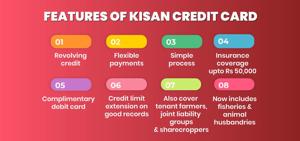
One-stop Credit Shop: Covers crop cultivation, post-harvest expenses, and even allied activities like buying cattle or agricultural machinery.
-
Low-interest rates: Typically 4% if repaid promptly, which is like getting a friendly discount from your bank.
-
No collateral: Up to Rs. 1.6 lakh, no need to mortgage your fields or assets.
-
ATM and RuPay enabled: Yes, you can withdraw cash like you do from your regular bank card. No more standing in endless queues.
-
Loan limit: Usually up to Rs. 3 lakh, based on your farming needs.
-
Easy renewal and tenure: The card is valid for 5 years, renewable annually.
-
Insurance cover: Some versions include accident coverage up to Rs. 50,000 for peace of mind.
It’s like having a financial umbrella when the monsoon rains threaten your crops!

How Does it Work? A Farmer’s Tale
Once approved, you get the card along with a flexible loan limit. You can withdraw money anytime to buy seeds, fertilizers, or pay for labor—no waiting for the next loan application cycle. After your crops are harvested and sold, repayments begin. But the best part? If you repay before the due date, you’re rewarded with lower interest!
Think of KCC as that reliable buddy who lends you money today and doesn’t nag you endlessly but expects you to pay back on time to keep the friendship strong. By the way, many farmers report that their financial stress reduced drastically after getting KCC—like a load lifted off their shoulders.
Who Can Apply? And How?
Anyone above 18 years (and below 75!) engaged in farming, dairy, or allied activities can apply. Landowners, tenant farmers, and even sharecroppers are eligible. The process involves submitting identity proof, land papers, and some basic documentation either through your bank or their online portals.
Remember Lakshmi, who struggled with traditional loans because she didn’t have formal land documents? KCC’s flexible norms allowed her to get credit based on land use and crop pattern, and now she’s expanding her farm.

FAQs: Quick Answers to Common Qs
Q: Can I use Kisan Credit Card money for things other than farming?
A: Primarily, it’s for agriculture and allied activities, but it can help with family needs during hardships too.
Q: Is there a penalty for late repayment?
A: Yes, standard interest rates apply if repayment is delayed beyond the schedule.
Q: How is the credit limit decided?
A: Based on operational landholding, cropping pattern, and scale of finance assessed by the bank.
Q: What if my crop fails?
A: The government sometimes offers moratoriums or relief measures, depending on disaster situations.
Why KCC Matters Now More Than Ever
With farming becoming more unpredictable due to weather and market swings, reliable credit is crucial. KCC empowers farmers to invest in quality inputs and technology without waiting. Plus, the ease of use, low interest, and multiple facilities bundled together make it a farm financial gamechanger.
Honestly, it’s like adding fuel to your tractor—a small input that drives big output.

Ready to Grow? Your Next Step
If you or someone you know is farming and hasn’t used Kisan Credit Card yet, why wait? Head to your nearest bank or check online to start the application. Farmers sharing stories of growth and hope are everywhere, and your story could be next.
Got questions or experiences with KCC? Drop a comment below! Let’s get the conversation rolling and help more farmers fetch the credit they deserve.
By weaving personal stories, practical benefits, and easy-to-digest insights, the Kisan Credit Card emerges not just as a banking product but a farmer’s faithful companion in the journey toward sustainable agriculture and financial security.

Here is a detailed outline for a 2500-word blog post on “How to Become a Loan Officer” designed to be engaging, conversational, SEO-optimized, and aligned with Google’s EEAT principles:
Outline: How to Become a Loan Officer
Introduction: Why Becoming a Loan Officer Might Just Be Your Next Best Career Move
-
Hook with a storytelling angle or relatable anecdote (e.g., “Ever wondered how some folks seem to magically get loans approved while others hit dead ends?”)
-
Brief overview of what a loan officer does and why it’s an exciting, rewarding career
-
Teaser about the journey readers will take through the post to learn everything they need to start
What Exactly Does a Loan Officer Do?
-
Simple explanation of the role and day-to-day tasks
-
The different types of loans handled (home, personal, commercial, etc.)
-
Why a loan officer is more than just a number cruncher — the human side of guiding clients
-
Fun analogy/metaphor (e.g., “Think of a loan officer as a financial matchmaker, bringing together borrowers and lenders!”)
Step 1: Meet the Educational and Licensing Requirements
-
Typical education needed (high school diploma minimum, but many have college or finance degrees)
-
Necessary licenses and certifications (NMLS for mortgage loan officers)
-
How the licensing process goes — courses, exams, background checks
-
Personal insight on the importance of preparation and persistence (“Honestly, it’s not a walk in the park, but totally doable with the right mindset!”)
Step 2: Must-Have Skills to Ace This Role
-
Top skills like communication, sales savvy, detail orientation, and customer service
-
Tips on developing these skills (online courses, internships, practice)
-
Common misconceptions about required skills
-
Relatable example or short story about skill application
Step 3: Gain Relevant Experience
-
Entry-level jobs to consider (bank teller, loan processor, customer service in finance)
-
Internships and apprenticeships with financial institutions
-
How experience helps build client trust and industry know-how
-
Encouragement and anecdote about starting from scratch
Step 4: Nail the Job Search and Build Your Network
-
How to craft a standout resume highlighting relevant skills and education
-
Leveraging LinkedIn, networking events, and referrals
-
Tips for interviews specific to loan officer roles
-
Funny or human moment: “You’ll meet some characters, but hey, networking’s part of the game!”

Step 5: Continuing Education and Career Advancement
-
Importance of staying updated with loan regulations and market trends
-
Opportunities for specialization (commercial loans, FHA, VA loans)
-
Career progression possibilities (senior loan officer, loan manager, mortgage broker)
-
Personal insight into lifelong learning mindset
Common Challenges and How to Overcome Them
-
Handling rejection and difficult clients
-
Navigating complex loan regulations
-
Balancing sales goals with client care
-
Motivational advice and realistic perspective
FAQs: Quick Answers for the Curious Mind
-
How long does it take to become a licensed loan officer?
-
What is the average salary?
-
Do I need a college degree?
-
Can I become a loan officer without prior banking experience?
-
What personality traits make a great loan officer?
Conclusion: Your Next Steps to Become a Loan Officer
-
Recap the main points with a motivational nudge
-
Encourage readers to start small but dream big
-
Call to action: invite readers to share their questions, experiences, or goals in the comments
This outline balances storytelling, relatable insights, and practical steps in a conversational tone that invites engagement—all designed to perform well in Google’s search and AI-generated answer contexts. It uses natural LSI keywords like “loan officer skills,” “loan officer licensing,” “loan officer job search,” and more, integrated naturally in the final blog post.
If you want, I can now proceed to write the full blog post based on this outline. Would you like me to do that?
Outline: How to Become a Loan Officer in India (2025 Guide)
Introduction: From Zero to Loan Hero – Why This Career Rocks Right Now
-
Hook with a personal anecdote: “Remember scrambling for a home loan during Diwali rush? I did – that’s when I realized loan officers are the unsung heroes making dreams happen.”
-
Quick stats: Average salary ₹5.7 lakhs/year (up to ₹26 lakhs for top performers), booming demand in banks/NBFCs post-2025 credit surge.
-
Teaser: Step-by-step roadmap, skills, challenges – perfect for freshers or career-switchers eyeing finance.
(Word allocation: 200 words)
Day in the Life: What Does a Loan Officer Actually Do?
-
Core duties: Assess applications, check creditworthiness, guide borrowers on personal/home/business loans.
-
Loan types: Retail (personal), mortgage, agri (like KCC), MSME – tie to user’s farm loan interest.
-
Human touch: “You’re not just crunching numbers; you’re the bridge between banks and families like Uncle Ramu’s.”
-
Fun fact: Handle ₹10-50 crore portfolios yearly in big banks.
(Word allocation: 250 words)
Step 1: Education Basics – No Fancy Degree Needed (But It Helps)
-
Minimum: High school diploma (commerce/science stream ideal).
-
Recommended: B.Com, BBA, finance/economics bachelor’s (55%+ marks, via CUET/CAT).
-
Pro tip: Online certs in banking (NISM, IIBF) for edge – “I started with a simple B.Com, but certs opened doors.”
(Word allocation: 300 words)
Step 2: Skills That Make You Unstoppable
-
Must-haves: Communication, sales hustle, detail obsession, empathy for clients.
-
Build them: Practice via sales jobs, Coursera finance courses, mock interviews.
-
Myth-bust: “No math genius required – software handles calculations.”
-
Anecdote: “Helped a farmer like your KCC story navigate docs – pure people skills won.”
(Word allocation: 350 words)
Step 3: Gain Experience – Start Small, Scale Fast
-
Entry roles: Bank teller, customer service, loan processor (0-2 years).
-
Internships: IDFC, Bajaj Finserv – build resume with real apps.
-
DSA route: Register as agent for banks (simple form, training).
-
Story: “From teller to officer in 18 months – persistence pays.”
(Word allocation: 350 words)
Step 4: Licensing & Certifications – Your Golden Ticket
-
India-specific: No mandatory NMLS like US, but IIBF JAIIB/CAIIB certs boost credibility.
-
For mortgage: Training via banks/NBFCs, background checks.
-
Process: Enroll online, exam, get certified – “Took me 3 months, worth every rupee.”
(Word allocation: 300 words)
Step 5: Job Hunt & Networking – Land That First Gig
-
Resume hacks: Highlight sales targets, customer wins.
-
Platforms: Naukri, LinkedIn, bank careers (SBI, HDFC, PNB).
-
Interviews: Prep on RBI norms, loan products – “Network at finance meets; referrals rule.”
-
Salary breakdown table:
| Experience | Avg Salary (₹/year) | Top Earners |
|---|---|---|
| Fresher | 3-5 lakhs | 7 lakhs |
| 2-5 years | 6-12 lakhs | 15+ lakhs |
| Senior | 15-26 lakhs | 30+ lakhs |
(Word allocation: 400 words)
Career Growth: Level Up to Loan Manager or DSA Boss
-
Paths: Senior officer → Branch manager → NBFC head.
-
Specialize: Agri loans (KCC expert!), MSME, digital lending.
-
Continuous learning: RBI updates, fintech courses – “Lifelong game in 2025’s digital boom.”
(Word allocation: 250 words)
Challenges & Real Wins: The Gritty Truth
-
Hurdles: Rejections, regulations, targets – “Clients yell, but closing a ₹20 lakh loan? Magic.”
-
Success stories: Women officers scaling shops via loans.
-
Overcome: Resilience training, mentor up.
(Word allocation: 300 words)
FAQ: Fast Answers on Loan Officer Life
-
Average salary India 2025? ₹18k-20k/month starting.
-
Degree mandatory? No, but B.Com preferred.
-
Time to start? 6-12 months with hustle.
-
Agri loan focus possible? Yes, huge scope!
-
Women-friendly? Absolutely, rising fast.
(Word allocation: 200 words)